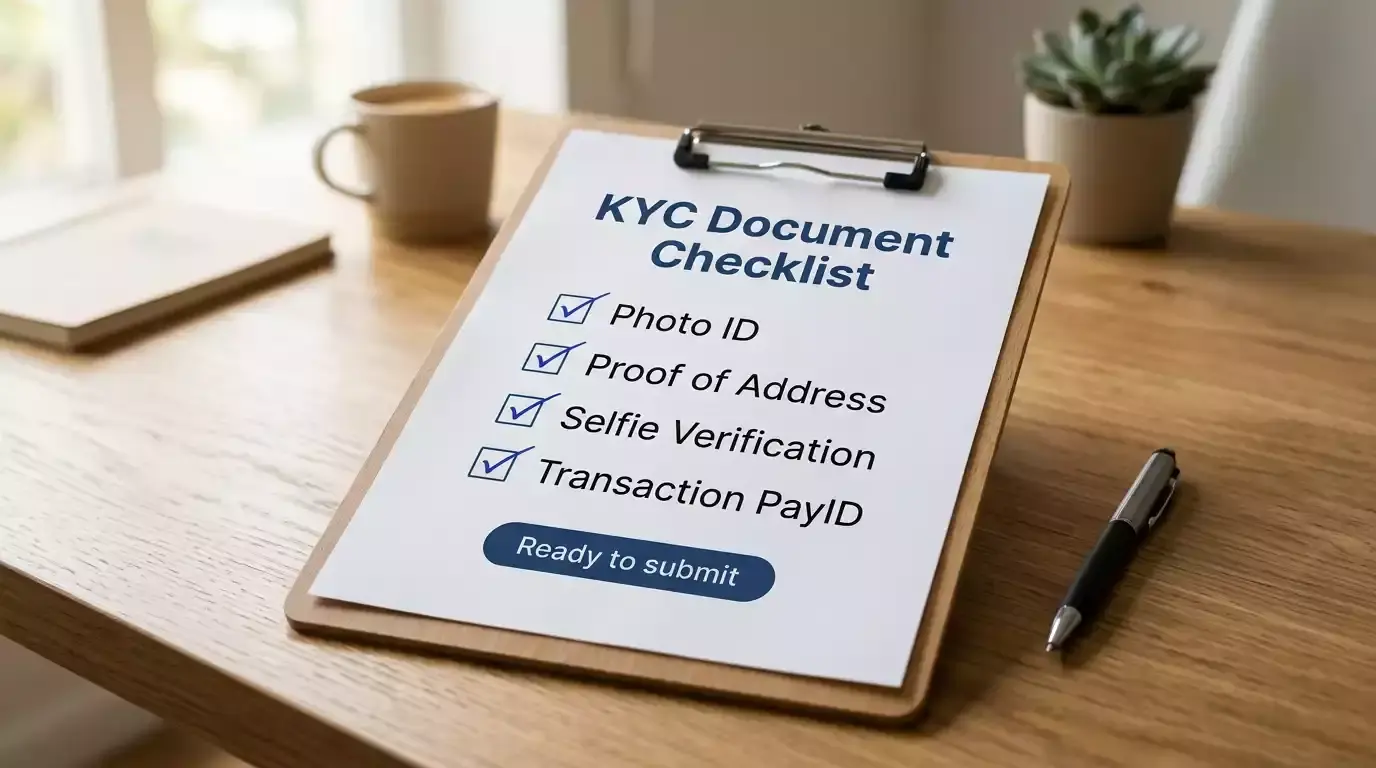

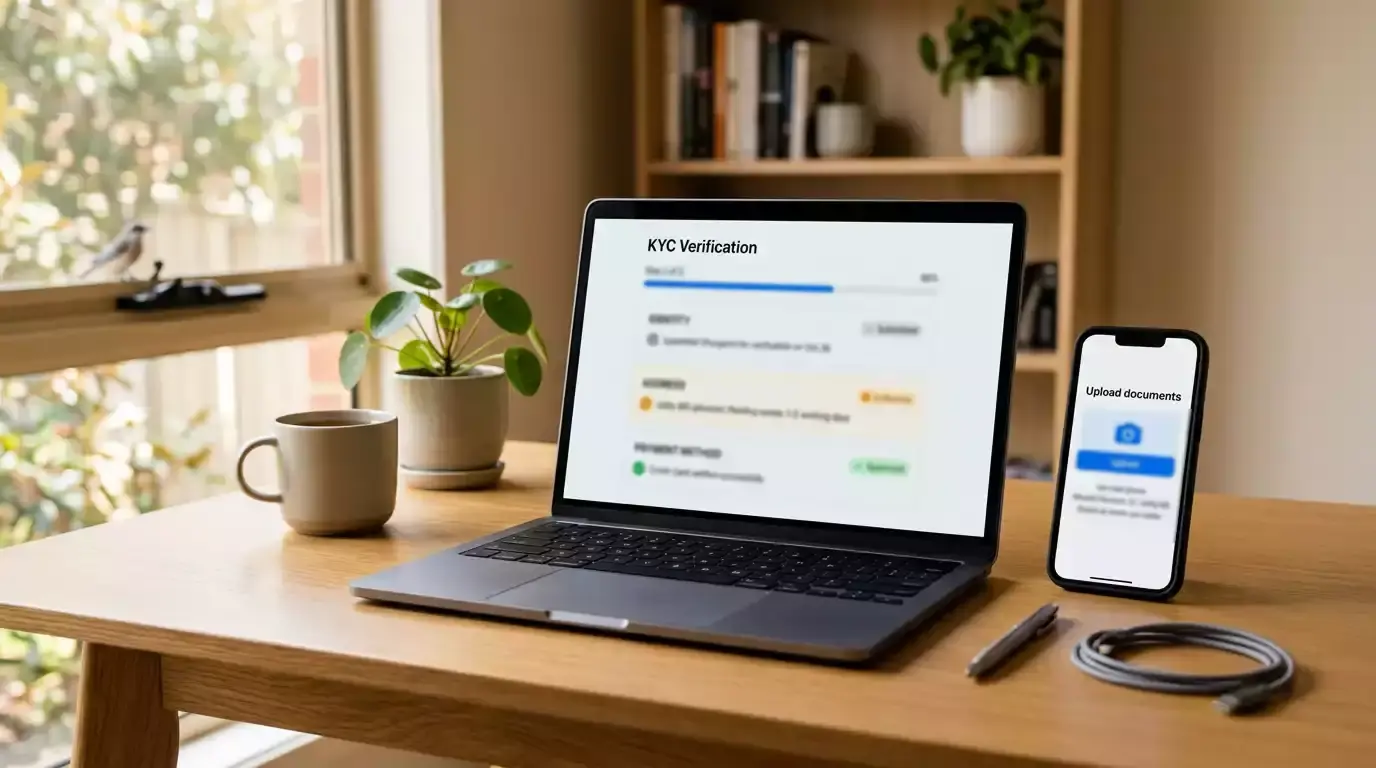
Crown Resorts was fined a record AU$450 million by AUSTRAC for serious and systemic failures in anti-money laundering and counter-terrorism financing compliance. That penalty reshaped how every operator in the Australian market thinks about identity verification. Know Your Customer is not bureaucratic box-ticking — it is the regulatory foundation that determines whether a casino can operate legally, and it directly affects how quickly you can withdraw your winnings.
I have guided hundreds of players through KYC at online casinos, and the single most common complaint is timing — not the process itself, but being surprised by it at the worst possible moment. This guide covers what to expect and how PayID changes part of the equation.
Standard KYC Documents at PayID Casinos
Since the credit card gambling ban took effect on 11 June 2024, with penalties of up to AU$234,750 for non-compliance, operators have tightened their verification processes across all payment methods. The standard KYC package at most PayID casinos includes three document categories.
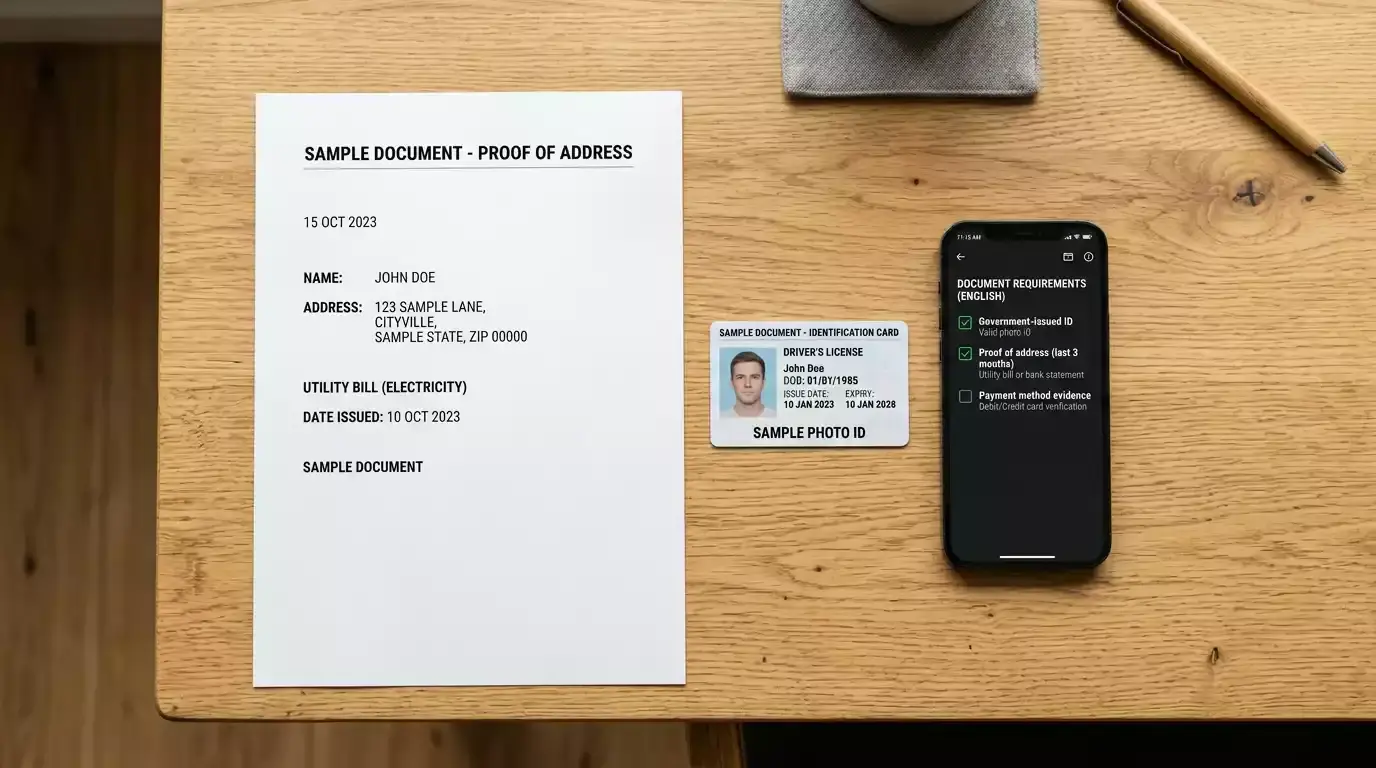
Identity verification requires a government-issued photo ID — Australian passport, driver’s licence, or proof-of-age card. Some operators accept foreign passports for non-resident players, but Australian-issued documents process faster because operators can verify them against domestic databases.
Address verification typically requires a utility bill, bank statement, or government correspondence dated within the last three months. The name and address on this document must match your casino account details. Some operators accept a screenshot of your banking app’s account details page as address verification, which is convenient for players who receive all their bills electronically.
Payment verification confirms that the deposit method belongs to you. For PayID, this usually means providing a screenshot or statement showing the PayID transfer to the casino from an account in your name. Since PayID transactions display both the sender’s registered name and the recipient’s name, this step is often simpler than with card payments, where you might need to photograph the physical card.

How PayID Simplifies Identity Verification
PayID does not replace KYC, but it streamlines one of the most friction-prone aspects of it — payment-method verification. When you deposit via PayID, the casino receives a payment from a verified bank account with a registered name attached. That name has already been verified by your bank through its own KYC process when you opened the account. This creates a chain of trust: your bank verified your identity, your bank issued the PayID, and the PayID name matches your casino account.
Some operators have begun recognising this chain of trust as partial verification, reducing the number of documents required for PayID depositors compared to card or e-wallet users. This is not universal — many casinos still require the full document package regardless of deposit method — but the trend is toward lighter-touch verification for bank-verified payment methods.

The most important practical advice I can give: complete KYC before you need to withdraw. Upload your documents during registration or immediately after your first deposit. Most casinos allow you to submit verification documents proactively through your account settings. Doing this when there is no urgency means your account is fully verified when you request your first withdrawal, eliminating the most common cause of payout delays.
For detail on how KYC processing time affects your withdrawal timeline, the withdrawal time breakdown covers each stage of the process.