

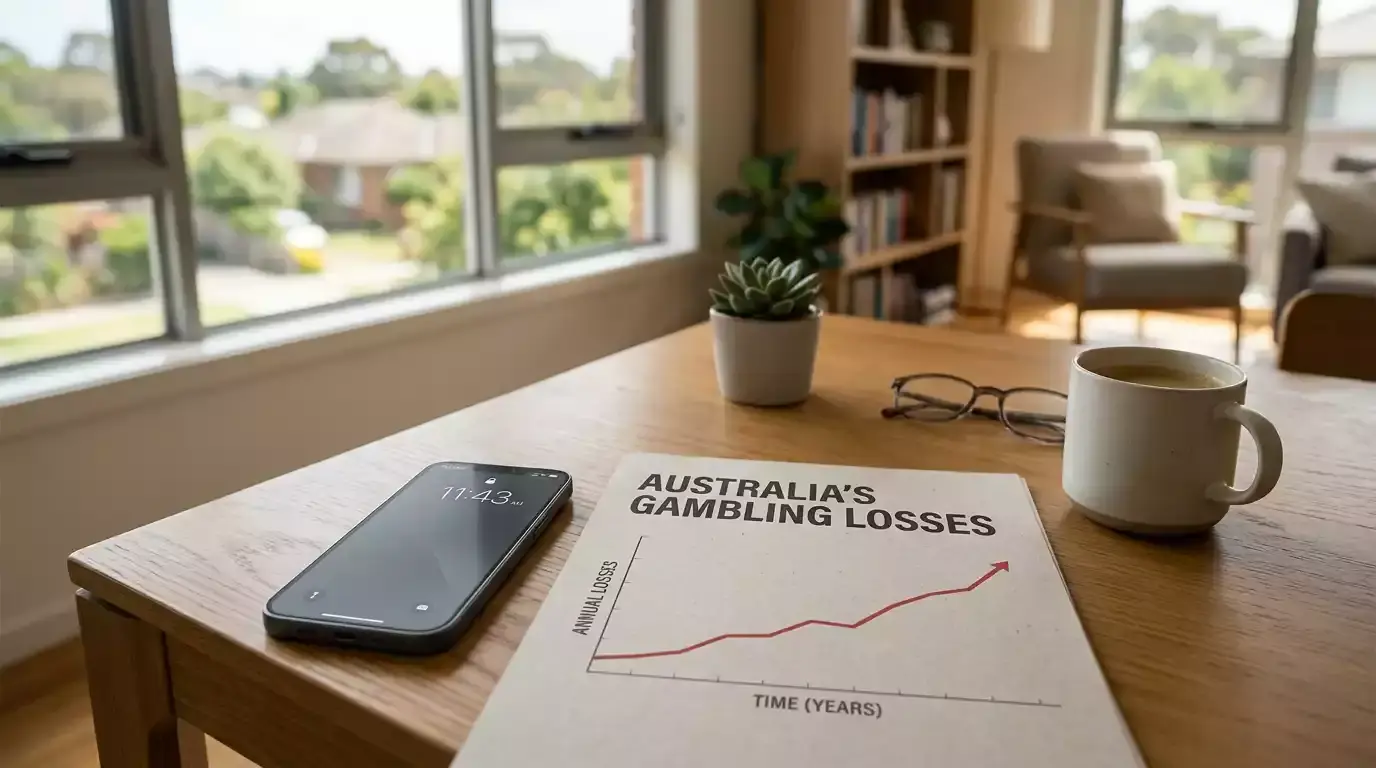
Australian gambling losses reached AU$31.5 billion in the 2022–23 financial year. That figure exceeds the country’s expenditure on aged care. Per capita, Australians lose more on gambling than any other nationality — a distinction that has held for years and shows no sign of reversing. If you use PayID at online casinos, understanding where your activity fits within this national picture is not about guilt; it is about context that informs better decisions.
I have tracked payment flows across the iGaming sector for the better part of a decade, and the scale of Australian gambling expenditure consistently surprises people who encounter the numbers for the first time. This article covers what the data shows, where the money goes, and how PayID’s transaction transparency can serve as a personal reality check.
Breaking Down the AU.5 Billion
The Queensland Government Statistician’s Office and equivalent state agencies compile gambling expenditure data across all forms — pokies, racing, sports betting, lotteries, and casino table games. Pokies (electronic gaming machines in pubs and clubs) account for the largest single category, followed by racing and sports wagering. Online gambling — the segment where PayID is most relevant — represents a growing but still minority share of total losses.
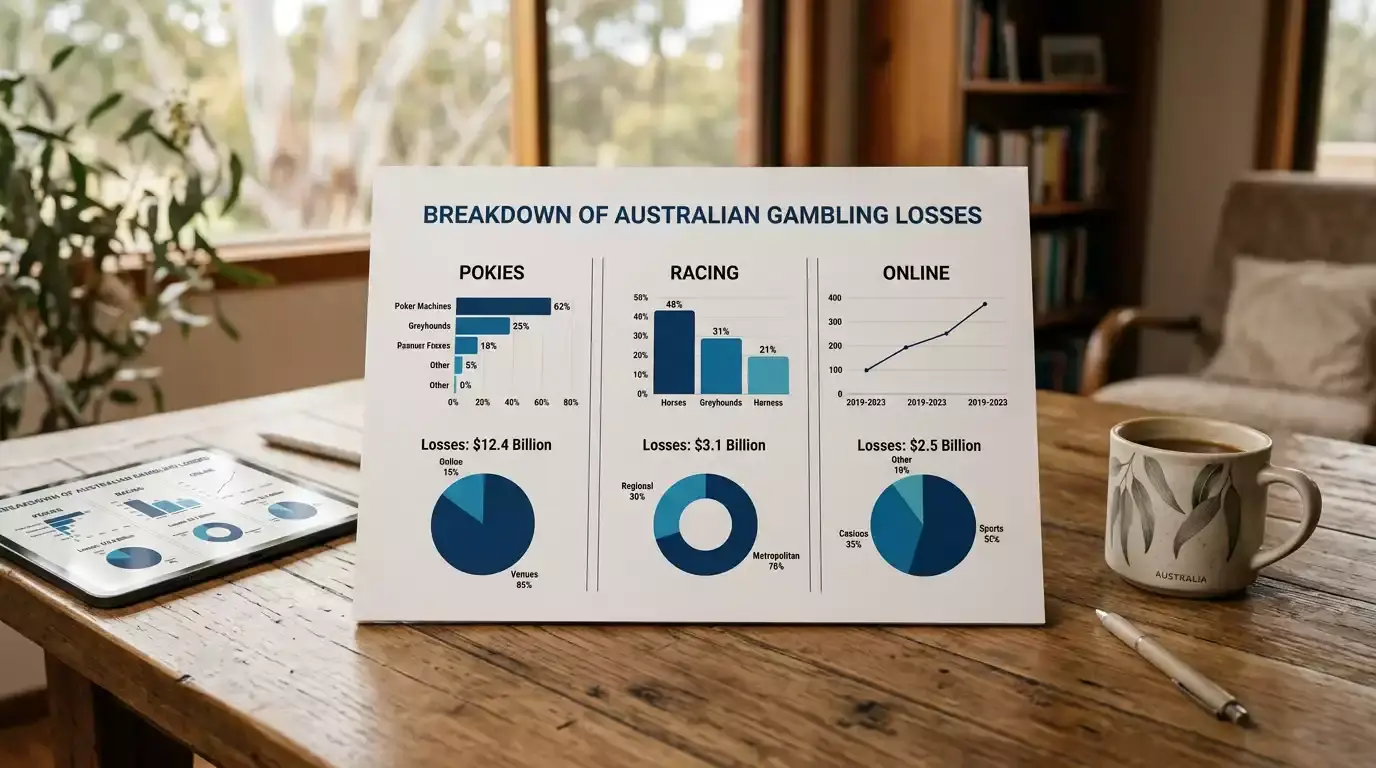
Online wagering turnover surged by 165.7 per cent year on year to AU$75.4 billion. Turnover is not the same as losses — it includes all money wagered, including recycled winnings. But the growth rate signals a rapid expansion of online gambling activity, driven partly by the convenience of instant payment methods like PayID and partly by the proliferation of mobile betting apps during and after the pandemic years.
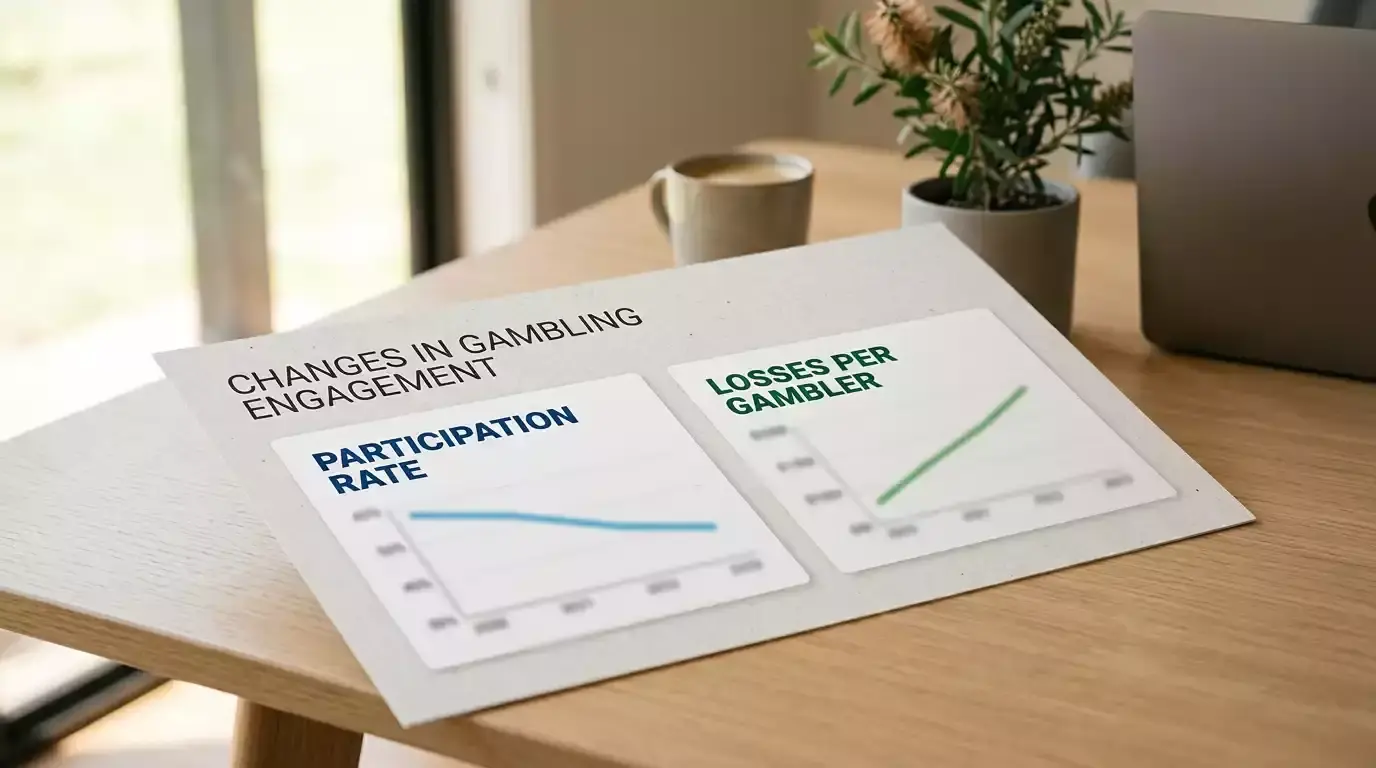
The research from the Australian National University found that while overall gambling participation declined slightly to 58.8 per cent in 2025, levels of risky gambling are increasing. Fewer people are gambling, but those who do are spending more. This concentration of expenditure among a smaller active population has implications for harm — the average loss per gambler is rising even as the total number of gamblers falls.
What This Means for PayID Casino Players
These national figures provide a benchmark for personal reflection. If you deposit AU$200 per month at PayID casinos, your annual gambling expenditure is AU$2,400 — a tiny fraction of the national total, but potentially significant relative to your personal income and expenses. The question is not how your spending compares to the national average, but how it compares to your own budget.
PayID’s value in this context is transparency. Every deposit appears in your banking app instantly, with the recipient name and amount clearly displayed. Unlike card transactions that can take days to post, or e-wallet balances that obscure the connection to your bank account, PayID provides real-time visibility into your gambling expenditure alongside your everyday spending. When your casino deposits appear in the same feed as your groceries and utilities, the relative scale becomes immediately apparent.

The regulatory response to these loss figures has been substantial. ACMA has blocked 1,708 illegal gambling sites. The credit card gambling ban, effective since 11 June 2024, removed the most dangerous payment method — one that allowed gambling with borrowed money. BetStop has registered 59,830 self-exclusions. And the 2027 gambling advertising ban will reduce the promotional exposure that drives impulse deposits. Each of these measures addresses a different dimension of the problem.
For individual players, the practical takeaway is to use the tools available. Set deposit limits at your casino. Enable gambling spend tracking in your banking app if your bank offers it. Review your PayID transaction history weekly. The national loss figures are a societal problem; your personal gambling expenditure is something you can measure and control. The responsible gambling tools guide covers the specific controls available to PayID casino players.