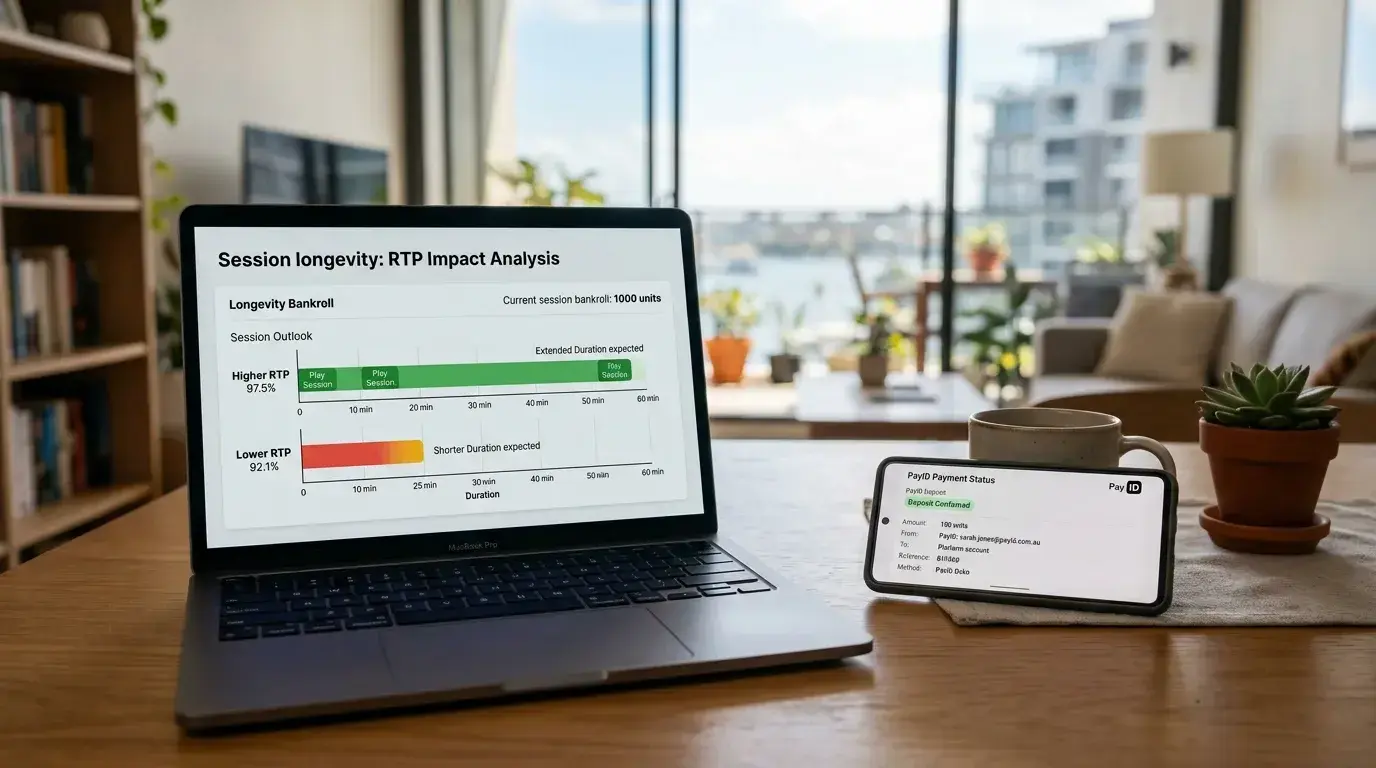


Online wagering turnover in Australia surged by 165.7 per cent year on year to AU$75.4 billion, and a significant portion of that volume passes through games with vastly different return-to-player rates. The difference between a pokie with 94 per cent RTP and one with 97 per cent RTP might seem trivial — three percentage points — but over hundreds of spins, that gap translates into substantially different bankroll outcomes. Understanding RTP is not about finding a way to win consistently; it is about making informed choices with your money.
I have analysed game catalogues across dozens of PayID casinos, and the RTP variation within a single operator’s library can span ten or more percentage points between the lowest and highest returning games. This guide explains what the numbers mean, where to find them, and how to use them practically.
What Return-to-Player Actually Represents
RTP is a statistical average calculated over millions of simulated or actual spins. A game with 96 per cent RTP returns AU$96 for every AU$100 wagered over its entire lifetime across all players. It does not mean you personally will get AU$96 back from a AU$100 session — individual sessions can deviate wildly from the theoretical average. You might win AU$500 in one session and lose AU$100 in the next, and both outcomes are consistent with a 96 per cent RTP game.
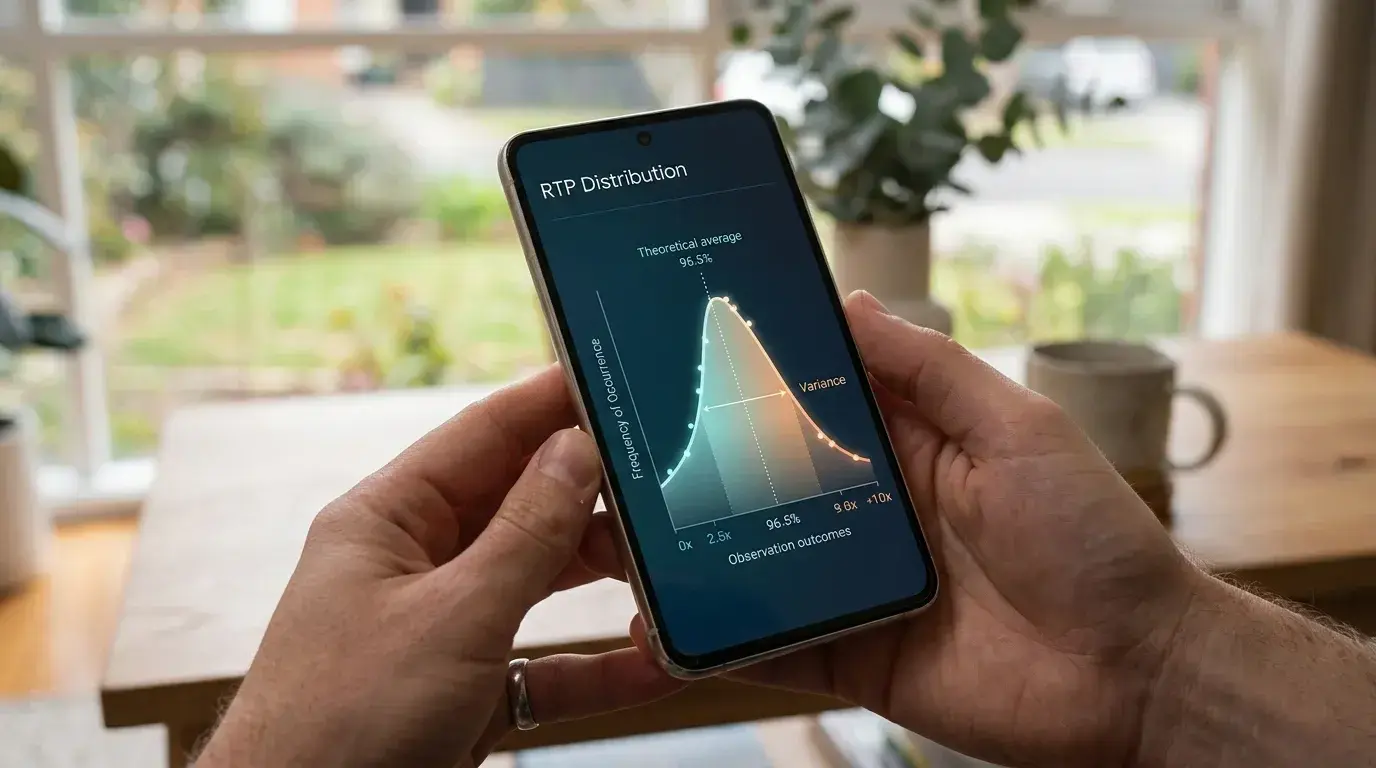
The house edge is the inverse of RTP. A 96 per cent RTP game has a 4 per cent house edge — meaning the operator expects to retain AU$4 out of every AU$100 wagered over time. This is how casinos generate revenue, and it applies regardless of payment method. Your PayID deposit faces the same mathematical reality as a card deposit or a crypto deposit — the payment method does not influence game outcomes.
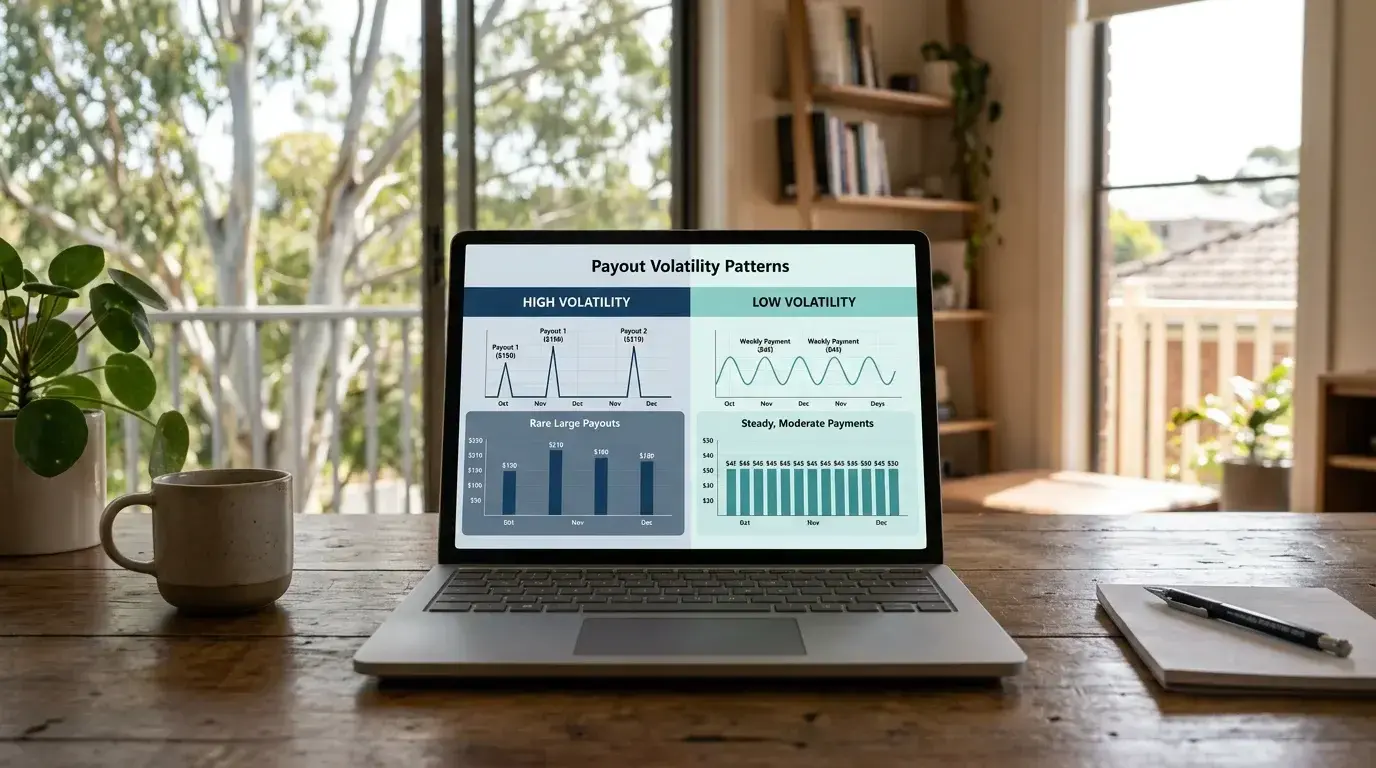
Volatility — sometimes called variance — is the second critical metric that RTP alone does not capture. A high-volatility game with 96 per cent RTP produces larger but less frequent wins. A low-volatility game with the same RTP produces smaller, more frequent wins. Both return the same amount over millions of spins, but the player experience — and the bankroll requirements — differ dramatically.
Finding and Comparing RTP at PayID Casinos
Most reputable game providers publish RTP figures for their titles. You can typically find this information in the game’s help or information menu — usually accessible through a settings icon within the game interface. Some PayID casinos publish RTP tables in their terms and conditions or on dedicated information pages, though this practice is not universal.
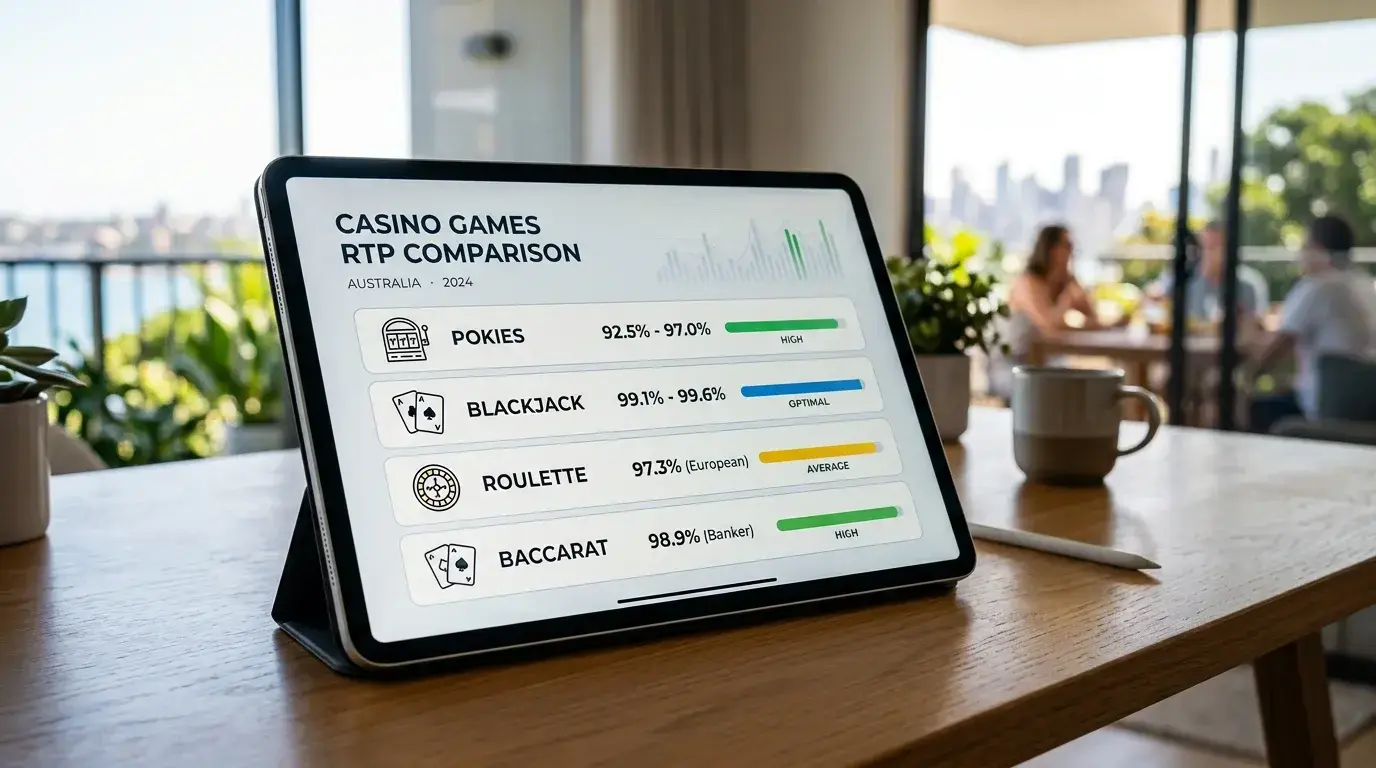
Pokies at PayID casinos typically range from 94 to 97 per cent RTP, with most falling between 95 and 96.5 per cent. Table games offer higher theoretical returns — blackjack with basic strategy can exceed 99 per cent, roulette sits between 94.7 and 97.3 per cent depending on variant, and baccarat banker bets return approximately 98.94 per cent.
One important caveat: some game providers allow operators to configure RTP within a range. A pokie listed at 96.5 per cent RTP by the provider might be set to 94.5 per cent at a specific casino. This practice is legal but not always disclosed transparently. If a casino publishes its actual RTP configurations, that is a positive transparency signal. If it does not, assume the RTP may be at the lower end of the provider’s published range.
For practical purposes, choose games with published RTPs above 96 per cent if bankroll longevity is your priority. Below 95 per cent, the house edge accumulates faster and shortens your expected session length for a given deposit. The table games guide covers specific house edges for non-pokie options.